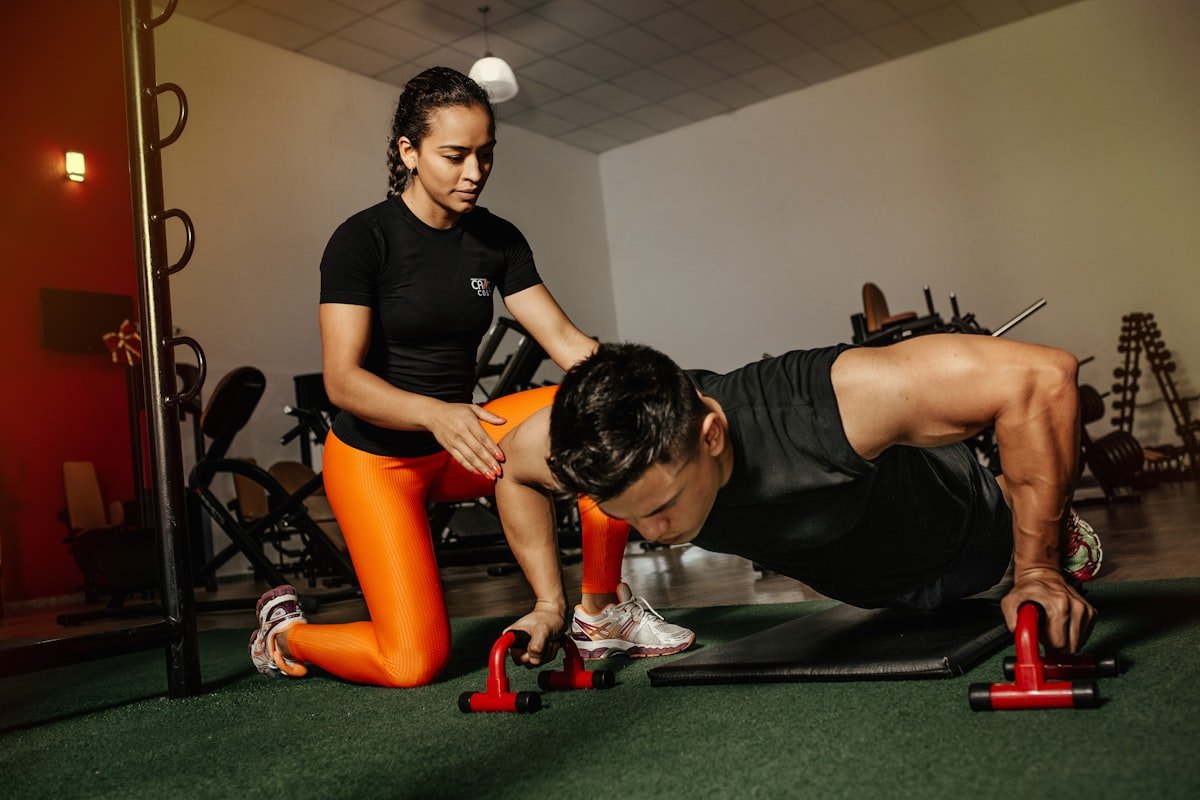
Most people think of core training as crunches and sit-ups. For strength athletes, the core serves a completely different function — it is a stabilising structure that transfers force between the lower and upper body. Training it incorrectly leaves a critical weak point in every major lift.
Breadcrumb: Blog › Training › Core Training for Strength Athletes
What Is the Core and What Does It Do?
The core is not just your abs — it is the entire muscular system surrounding your spine and pelvis: rectus abdominis, obliques, transverse abdominis, spinal erectors, multifidus, hip flexors, and glutes. During squats, deadlifts, and overhead presses, the core braces isometrically to protect the spine and transfer force efficiently from the ground up. Weakness here bleeds into every major lift.
Core Function vs. Core Aesthetics
Visible abs are primarily a function of body fat percentage, not core strength. Core training for strength builds the anti-rotation, anti-extension, and bracing capacity needed to move heavy loads safely. This is functional core strength — distinct from the aesthetic goal of visible abs.
The Best Core Exercises for Strength Athletes
Anti-Extension: Plank Variations
The standard plank trains the core to resist extension — the most important function during deadlifts and squats. Progress from static holds (30–60s) to RKC planks (maximum tension), then to plank with arm or leg reaches. Avoid letting the lower back sag or hips rise.
Anti-Rotation: Pallof Press
Using a cable or resistance band, press directly forward from your chest and hold against rotational force. This trains the obliques and deep core stabilisers in exactly the way they function during unilateral movements. One of the most underused but effective core exercises.
Anti-Lateral Flexion: Suitcase Carry
Carry a heavy dumbbell or kettlebell in one hand and walk. The loaded side tries to pull you into lateral flexion — your core resists. This trains the quadratus lumborum and obliques in a functional, loaded pattern.
Hip Flexion: Hanging Leg Raises
From a dead hang (great for grip strength too), raise your legs until parallel or above. This trains the hip flexors and rectus abdominis through a large range of motion. Begin with bent-knee raises and progress to straight-leg or toes-to-bar.
Loaded Carries: The Most Functional Core Exercise
Farmer carries, yoke walks, and waiter walks are among the most complete core training exercises available. Walking under load requires bracing, stabilisation, and coordination simultaneously. Add them as finishers after your main strength work.
How to Programme Core Work
2–3 core-specific exercises per session, performed after main compound lifts. 3 sets each, 2–3 times per week. Note that heavy compound movements — especially squats, deadlifts, and overhead presses — already train the core substantially as a secondary effect.
Frequently Asked Questions
Should I train abs every day?
No. The core muscles respond to training the same as any other muscle group — they need recovery time. 2–3 dedicated core sessions per week is optimal. Daily light movement like walks is fine but dedicated ab sessions every day is unnecessary and can impair recovery.
Do heavy compound lifts train the core enough?
For most strength goals, heavy squats, deadlifts, and overhead presses provide substantial core training as a secondary effect. Dedicated core work adds insurance and addresses angles that compound lifts do not cover — particularly anti-rotation and lateral stability.
Can I train core if I have lower back pain?
Often yes — in fact, building core strength frequently reduces lower back pain. However, specific exercises may need modification. Avoid any movement that increases pain. A physiotherapist can advise on appropriate core training during rehabilitation.
Get the next one in your inbox.
Practical insights — no fluff, straight to your inbox.
Zerxus Coaching Team
Certified Strength & Conditioning Coaches
The Zerxus coaching team combines qualified personal trainers, certified strength coaches, and evidence-based sports science to build programmes that actually work. Every article is grounded in peer-reviewed research and practical coaching experience — no fads, no shortcuts.