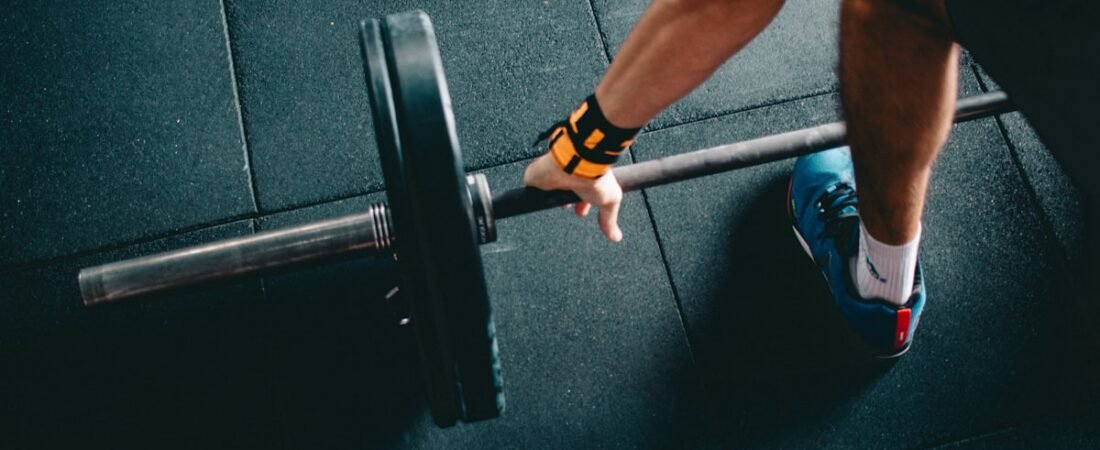

The Romanian deadlift (RDL) is the most effective exercise for building hamstring strength and size — and one of the most important accessory movements for improving your conventional deadlift and squat. Here is how to perform it correctly and programme it effectively.
Breadcrumb: Blog › Exercises › Romanian Deadlift Guide
RDL vs Conventional Deadlift: What is the Difference?
The conventional deadlift starts from the floor with the bar at rest. The RDL starts from standing and never touches the floor — the bar descends until you feel a strong hamstring stretch, then you return to standing. The RDL places more sustained tension on the hamstrings throughout the movement and allows less lower-back fatigue than the conventional deadlift, making it a superior hamstring isolation exercise.
RDL Technique: Step-by-Step
- Stand with the bar at hip height (from a rack) or unrack a barbell. Feet hip-width, toes forward
- Push hips back (hip hinge — see hip hinge guide) while keeping the bar in contact with your legs
- Lower until you feel a strong stretch in your hamstrings — typically when the bar is at mid-shin. Some reach the floor; do not force it
- Maintain a neutral spine throughout — this is not the place to round
- Drive your hips forward to return to standing, squeezing your glutes at the top
- Do not fully lock out between reps — keep tension in the hamstrings
Common RDL Mistakes
- Rounding the lower back: Most dangerous mistake. Brace hard and keep spine neutral throughout
- Bar drifting away from legs: Leads to lower back strain — keep the bar in contact with your thighs throughout the descent
- Going too deep by compensating with lower back: Stop when you feel hamstring stretch, not when you reach the floor. Depth should be limited by hamstring flexibility, not back rounding
- Fully straightening legs (stiff-leg deadlift): A slight knee bend is correct for the RDL — straight legs shift emphasis away from hamstrings
Programming the RDL
3–4 sets of 8–12 reps, 1–2 times per week. The RDL creates significant DOMS in the hamstrings initially — programme it at the end of leg sessions (after squats or deadlifts) or on a separate lower body day. Apply progressive overload — add 2.5–5kg when all reps are completed with good technique.
RDL Variations
- Dumbbell RDL: More forgiving for beginners — allows natural arm path
- Single-leg RDL: Unilateral version that challenges balance and corrects left-right imbalances
- Banded RDL: Adds accommodating resistance — more tension at the top where hamstrings are shortest
- Cable pull-through: Similar hip hinge pattern with continuous cable tension
Frequently Asked Questions
How heavy should I go on RDLs?
Lighter than your conventional deadlift. Most people RDL approximately 60–70% of their deadlift weight. The priority is feeling the hamstrings stretch and maintaining a neutral spine — not moving maximum load. Control the descent — 2–3 seconds down is appropriate.
Do RDLs work the glutes?
Yes — the glutes are heavily involved in hip extension during the RDL, particularly at lockout. For maximum glute activation, squeeze hard at the top of each rep. However, hip thrusts and squats provide more glute-dominant stimulus than the RDL.
Can I do RDLs if I have tight hamstrings?
Yes — and RDLs will improve hamstring flexibility over time. Start with a smaller range of motion (lower only until you feel a moderate stretch) and gradually increase as your flexibility improves. Never force range by rounding your lower back.
Get the next one in your inbox.
Practical insights — no fluff, straight to your inbox.
Zerxus Coaching Team
Certified Strength & Conditioning Coaches
The Zerxus coaching team combines qualified personal trainers, certified strength coaches, and evidence-based sports science to build programmes that actually work. Every article is grounded in peer-reviewed research and practical coaching experience — no fads, no shortcuts.