By Zerxus Team | Exercise Guides
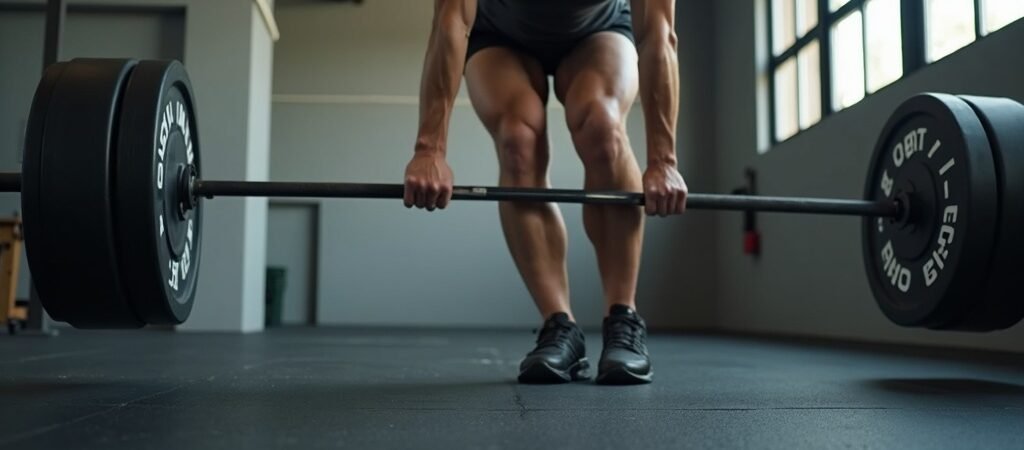
Most lifters treat the deadlift as a back exercise and wonder why their lower back aches after every session. The hip hinge is a movement pattern — not a single exercise — where you push your hips backward while keeping a neutral spine, loading the hamstrings and glutes rather than rounding through the lumbar vertebrae. Master this pattern and every pull, every hinge variation, and every athletic movement becomes safer and stronger.
Here is what the research actually shows, and here is the exact approach to build the pattern from the ground up.
Breadcrumb: Blog › Exercise Guides › Hip Hinge Exercises
What Is a Hip Hinge and Why Does It Matter?
A hip hinge is a movement where the hips move backward on a horizontal plane while the spine stays neutral (flat, not rounded or hyperextended) and the knees bend only slightly. Think of closing a car door with your backside — that is the shape of a hinge.
The hinging movement loads the posterior chain — the hamstrings, glutes, and lower-back erectors that run up the back of your body. These muscles are responsible for generating force in sprinting, jumping, and every heavy compound lift. Weakness here bleeds into every major lift.
A squat, by contrast, involves the hips moving downward (vertically) with significant knee bend. Both are essential. They are not the same pattern.
What Are the Best Hip Hinge Exercises?
The list below moves from beginner-accessible to more technically demanding. Work your way down as the pattern becomes automatic.
1. Romanian Deadlift (RDL)
The single best teaching tool for the hip hinge pattern. You start from a standing position, push the hips back, lower the bar (or dumbbells) down the front of your legs until you feel a strong pull in the hamstrings, then drive the hips forward to stand.
- Load range: 40–70% of your deadlift one-rep max (1RM — the most weight you can lift once)
- Rep range: 3–4 sets of 8–12 reps
- Key cue: Bar stays in contact with your legs throughout. If it swings away from you, your back is rounding.
2. Kettlebell Swing
The swing teaches explosive hip extension — the snap at the top of the hinge — that slow RDLs cannot replicate. The kettlebell (a cast-iron weight with a handle, measured in kg) is swung forward by driving the hips, not by pulling with the arms.
- Load range: 16–32 kg depending on your training age
- Rep range: 5–10 sets of 10–15 reps (conditioning focus) or 5 sets of 5 (power focus)
- Key cue: Hike the kettlebell back between your legs like a centre in American football. Hips first, arms follow.
3. Conventional Deadlift
The conventional deadlift is a hinge with the bar starting from the floor. Because the bar is further from your centre of mass at the start, hip position and spinal bracing matter more here than in any other variation.
- Load range: Build from 60% 1RM with perfect form before adding weight
- Rep range: 3–5 sets of 3–6 reps for strength; 3–4 sets of 6–10 reps for hypertrophy (muscle growth)
- Key cue: Before you pull, create tension by trying to “push the floor away” rather than thinking about lifting the bar.
4. Good Morning
A barbell is placed across the upper back (as in a squat), and you hinge at the hip, letting the torso lower toward horizontal. Because the load is above your centre of mass, the spinal erectors and hamstrings work extremely hard to control the movement.
- Load range: Start light — 20–40% of your squat 1RM
- Rep range: 3 sets of 8–10 reps
- Key cue: Soft knee bend (15–20°) to protect the joint; lower only as far as hamstring flexibility allows without rounding the lower back.
5. Single-Leg Romanian Deadlift
The single-leg RDL (SL-RDL) adds a balance challenge that forces each side of the posterior chain to work independently. Bilateral lifts (using both legs) can hide left-right imbalances; the SL-RDL exposes and corrects them.
- Load range: Dumbbells or kettlebells; 12–24 kg per hand for most intermediate lifters
- Rep range: 3 sets of 8–10 reps each side
- Key cue: Keep hips square to the floor — the most common error is letting the hip of the rear leg rotate upward.
6. Hip Hinge with Band (Teaching Drill)
Loop a resistance band at hip height around a rack, stand facing the rack, and step back until there is tension in the band. The band pulls your hips forward; your job is to push them back against it. This gives instant feedback on what a true hinge feels like versus a squat.
- Use for: Warm-up, technique reinforcement, beginners learning the pattern
- Reps: 2–3 sets of 10–15 slow, controlled reps
How to Programme Hip Hinge Exercises Each Week
Most intermediate lifters do well training hip hinge movements 2–3 times per week with at least 48 hours between sessions to allow posterior chain recovery.
A simple weekly split:
- Day 1 (heavy): Conventional deadlift — 4 sets of 4–5 reps at 80–85% 1RM
- Day 2 (moderate/accessory): Romanian deadlift — 3 sets of 8–10 reps; Single-leg RDL — 3 sets of 8 reps each side
- Day 3 (power/conditioning): Kettlebell swings — 5 sets of 10 reps
Total weekly sets per muscle group for the posterior chain: 12–16 working sets (a working set is a set taken close to failure, not a warm-up). Research shows this range sits within the productive hypertrophy window for most lifters. See the full guide on how many sets per week per muscle group for the complete breakdown.
Common Hip Hinge Mistakes
- Squatting the deadlift: Letting the knees travel far forward and the hips drop low turns a hinge into a squat. The torso should be more horizontal than vertical at the bottom of a deadlift.
- Rounding the lower back: Losing spinal neutrality shifts load from the posterior chain onto the lumbar discs. Brace your core (tighten your abs and hold your breath briefly as if you’re about to take a punch) before every rep.
- Hyperextending at lockout: Leaning back hard at the top of a deadlift compresses the lumbar spine. Stand tall — hips through, glutes contracted, that is lockout.
- Bar drift: The bar swinging away from your legs during an RDL or deadlift multiplies the lever arm and increases lower-back strain. Keep it close.
- Skipping the hip hinge drill: Jumping straight into loaded deadlifts without checking the pattern first. Use the band drill above as part of your warm-up before heavy hinge work.
Key Takeaways
- The hip hinge is a movement pattern — pushing the hips back with a neutral spine — not a single exercise.
- The Romanian deadlift is the best starting point for learning the pattern before moving to heavier variations.
- Train hinge movements 2–3 times per week, accumulating 12–16 working sets for the posterior chain.
- The most common errors — squatting the deadlift and rounding the lower back — both come from not understanding the hinge versus squat distinction.
- Use the band drill in your warm-up to reinforce the pattern before every heavy session.
Frequently Asked Questions
Is a deadlift a hip hinge or a squat?
A deadlift is a hip hinge. The movement is dominated by backward hip travel and hamstring loading, with the knees bending only enough to reach the bar. A squat involves the hips descending vertically with significant knee bend. Some lifters squat-style deadlift out of habit — this is inefficient and a common source of lower-back strain.
Can I do hip hinge exercises if I have tight hamstrings?
Yes, but reduce the range of motion. Lower the bar only as far as you can go while keeping a neutral spine. Tight hamstrings pull the pelvis into a posterior tilt (lower back rounds) at end range. As flexibility improves over 4–8 weeks of consistent training and stretching, your usable range will increase. The single-leg RDL with a light dumbbell is a good option while you build flexibility.
How is a hip hinge different from a squat?
In a hip hinge, the hips move backward (horizontally) and the torso tilts forward; knee bend is minimal. In a squat, the hips move downward (vertically), the torso stays more upright, and knee bend is significant. Both patterns are necessary for balanced strength training — they are not interchangeable.
Should I feel a hip hinge in my lower back?
Not as the primary sensation. You should feel the movement predominantly in your hamstrings and glutes. A mild awareness of the lower-back erectors working to maintain position is normal. Sharp pain or a dominant burning sensation in the lower back usually signals rounding — reduce the load, reset your brace, and focus on keeping the spine neutral before adding weight again.
How often should beginners practise the hip hinge pattern?
Daily practice of the bodyweight or band-resisted drill (2–3 sets of 10–15 reps) is fine and useful for building the motor pattern (the automatic movement habit your nervous system develops). Loaded hinge work — RDLs, deadlifts — is best kept to 2 sessions per week initially, with at least 72 hours between sessions while the posterior chain adapts to new stimulus.
Get the next one in your inbox.
Practical insights — no fluff, straight to your inbox.
Zerxus Coaching Team
Certified Strength & Conditioning Coaches
The Zerxus coaching team combines qualified personal trainers, certified strength coaches, and evidence-based sports science to build programmes that actually work. Every article is grounded in peer-reviewed research and practical coaching experience — no fads, no shortcuts.