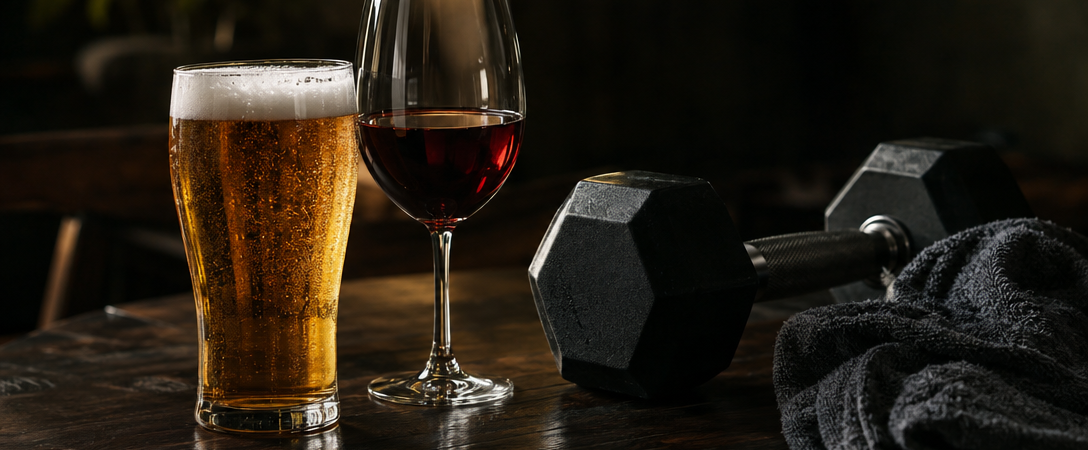
- Alcohol and muscle growth do not sit well together: alcohol can blunt muscle protein synthesis, disrupt sleep, and add empty calories.
- The damage scales with the dose. An occasional drink or two is unlikely to derail progress; regular heavy drinking is a real problem.
- Sleep disruption is one of the most underrated effects, and poor sleep quietly wrecks recovery.
- Timing matters: heavy drinking right after a hard session is the worst case for recovery.
- You do not have to be teetotal to build muscle, but you do have to be honest about how much and how often.
Alcohol and muscle growth do not sit well together. Yes, alcohol affects muscle growth and recovery, and not in your favour: it can temporarily blunt muscle protein synthesis, disturb the deep sleep your body repairs itself in, and pile on empty calories. The effect scales with the dose, so an occasional drink is a minor issue while regular heavy drinking meaningfully slows your progress. Understanding the mechanisms helps you make a sensible call rather than an anxious one.
How alcohol interferes with muscle
There are a few separate mechanisms at play, and they stack up.
It blunts muscle protein synthesis
Muscle protein synthesis is the process that turns your training and protein into new muscle. Alcohol appears to reduce this response after exercise, especially in larger amounts. The signal that tells your body to build is quieter for a while, which means the same workout produces a little less adaptation.
It disrupts sleep
This is the effect most people ignore. A few drinks may help you fall asleep, but they fragment the deeper stages of sleep where much of your recovery happens. You wake less rested, your training the next day suffers, and hunger and cravings often rise. Sleep is where muscle is repaired, and our guide to sleep and muscle recovery explains why protecting it matters so much.
It adds empty calories
Alcohol carries roughly seven calories per gram and brings almost no useful nutrition. Worse, it tends to come with high-calorie mixers and late-night food, and it loosens your discipline about eating. For anyone watching their intake, this is often where the real cost lands. Our notes on macronutrients put alcohol’s calories in context.
Dose and timing are everything
The headlines make alcohol sound like poison for lifters, but context matters. A single glass of wine with dinner on a Saturday is a very different thing from six pints after every session. The negative effects scale with how much you drink and how often.
| Pattern | Likely impact on muscle |
|---|---|
| A drink or two, occasionally | Minimal; easily absorbed by a good routine |
| Moderate drinking, once or twice a week | Small drag, mostly through sleep and calories |
| Regular heavy sessions | Meaningful; blunted building, poor sleep, calorie excess |
| Heavy drinking right after training | Worst case for that session’s recovery |
Timing adds another layer. Drinking heavily immediately after a hard workout hits recovery at the worst possible moment, when your body is primed to repair and rebuild. If you are going to drink, keeping it away from your training window softens the blow.
How to drink without wrecking your progress
If you enjoy a drink, you can keep it and still make gains. A few sensible habits:
- Keep it occasional and moderate. Frequency is the biggest variable; a weekly limit beats a nightly habit.
- Eat protein first. Have a solid, protein-containing meal before drinking so you are not building your night on an empty stomach.
- Separate it from training. Avoid heavy drinking right after your hardest sessions.
- Count the calories. Fit drinks into your daily total rather than pretending they are free.
- Protect the next day. Hydrate, get what sleep you can, and prioritise protein the following day.
Clearing up the myths
A couple of half-truths do the rounds. First, “one big night undoes a week of training.” It does not; the effect of a single occasion is real but modest, and your weekly consistency matters far more. Second, “you must be completely sober to build muscle.” Also false. Plenty of people build muscle while drinking occasionally. The honest position sits between the extremes: alcohol is a headwind, its strength depends on the dose, and you get to decide how much of that headwind you are willing to accept.
Frequently asked questions
Does alcohol affect muscle growth and recovery?
Yes. Alcohol can temporarily blunt muscle protein synthesis, disrupt the deep sleep where recovery happens, and add empty calories that crowd out better food. The size of the effect depends on how much and how often you drink. An occasional drink is a minor issue, whereas regular heavy drinking meaningfully slows muscle growth and recovery over time.
How much alcohol is too much for a lifter?
There is no single cut-off, but the harm scales with dose and frequency. A drink or two occasionally is unlikely to matter; regular heavy sessions are a genuine problem. The most damaging pattern is frequent, large amounts, especially right after training. If you drink, keeping it moderate and infrequent limits the impact on your progress considerably.
Is it bad to drink after a workout?
Heavy drinking straight after a hard session is the worst timing, because it interferes with recovery exactly when your body is primed to rebuild. A single drink is unlikely to ruin things, but a big night immediately post-training blunts the adaptation you just earned. If you plan to drink, eat protein first and keep it away from your toughest workouts.
Can I still build muscle if I drink on weekends?
Yes, provided the amount is moderate and it fits your calories. Occasional weekend drinking is a small headwind, mostly through sleep quality and extra calories, not a hard stop on muscle growth. Keep the quantity sensible, protect your protein intake and sleep, and separate heavy drinking from training, and your weekday consistency will carry the results.
The bottom line
Alcohol is a headwind for muscle, not a wall. Its cost rises with how much and how often you drink and with how close it lands to training. Keep it occasional, eat protein first, guard your sleep, and count the calories, and you can enjoy a drink without stalling your progress. Zerxus keeps your training consistent through real life. Build your plan at Zerxus.
Get the next one in your inbox.
Practical insights — no fluff, straight to your inbox.
Zerxus Coaching Team
Certified Strength & Conditioning Coaches
The Zerxus coaching team combines qualified personal trainers, certified strength coaches, and evidence-based sports science to build programmes that actually work. Every article is grounded in peer-reviewed research and practical coaching experience — no fads, no shortcuts.