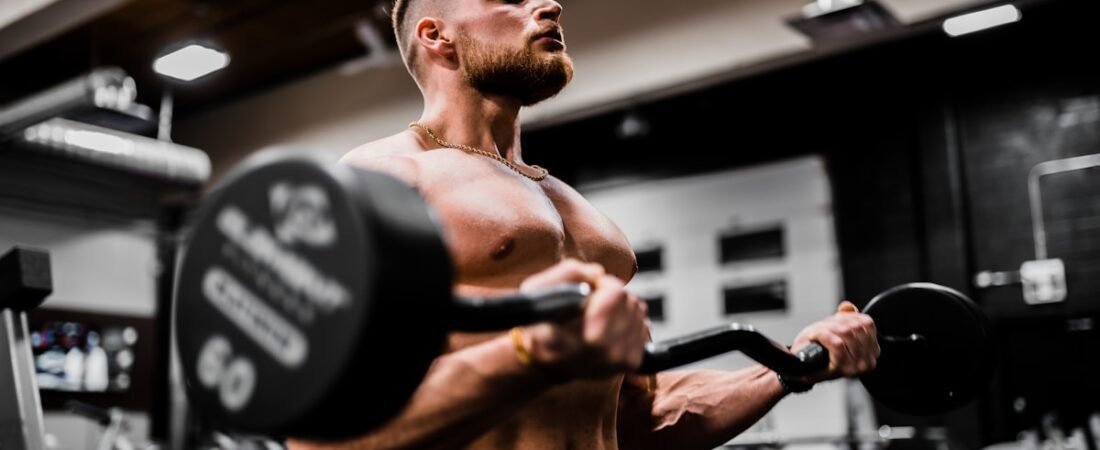
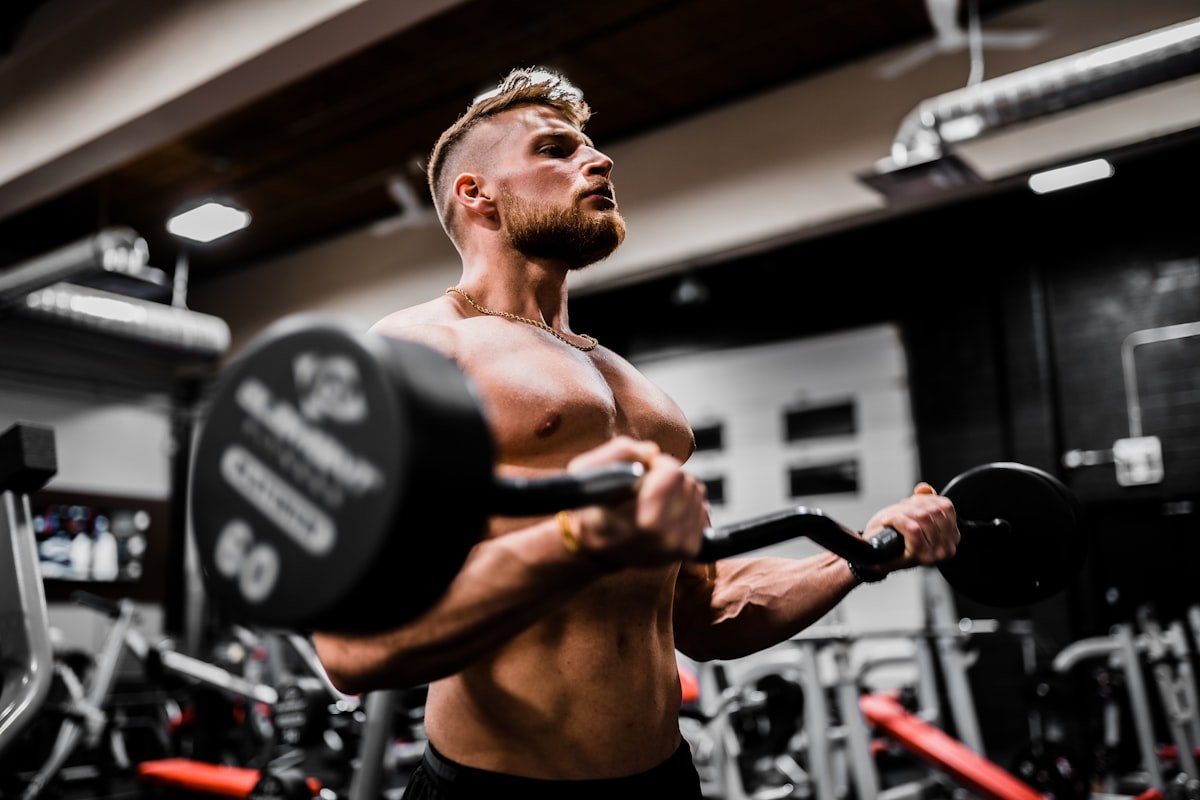
Bigger arms are one of the most common physique goals — and one of the most misunderstood to train. The arms consist primarily of biceps (front) and triceps (back), with the triceps comprising two-thirds of upper arm size. Here is how to develop both effectively.
Breadcrumb: Blog › Exercises › How to Build Bigger Arms
The Anatomy: What Makes Up Your Arms
Biceps brachii: two heads (short and long) responsible for elbow flexion and supination. Brachialis: lies beneath the biceps — developing it pushes the biceps upward, creating more peak. Triceps brachii: three heads (long, lateral, medial) responsible for elbow extension — the largest muscle of the upper arm and frequently undertrained.
The Most Important Insight: Compounds Train Arms Too
Rows and pull-ups train the biceps heavily. Pressing movements (bench press, overhead press) train the triceps heavily. If you are doing these compound movements with sufficient volume and progressive overload, your arms are already receiving significant training stimulus. Isolation work adds volume on top of this foundation.
Best Bicep Exercises
Barbell Curl
The gold standard for bicep mass. Allows the heaviest loads. Stand with supinated grip, curl to chin level, lower under control. 3–4 sets of 8–12 reps.
Incline Dumbbell Curl
On an incline bench, arms hang behind the body — stretching the long head of the bicep at the start of the movement. One of the best exercises for bicep peak. 3 sets of 10–15 reps.
Hammer Curl
Neutral grip targets the brachialis primarily. Developing the brachialis creates arm thickness and pushes the bicep upward. Include 2–3 sets of 12–15 reps alongside traditional curls.
Best Tricep Exercises
Close-Grip Bench Press
Allows the heaviest tricep loading. Hands shoulder-width on the bar, same technique as the regular bench press. The triceps do the majority of the work. 3–4 sets of 6–10 reps.
Skull Crusher (Lying Tricep Extension)
EZ bar or dumbbells lowered to forehead with upper arms vertical. Excellent for the long head of the triceps (the biggest component). 3 sets of 10–15 reps.
Cable Tricep Pushdown
Constant tension throughout the movement. Rope attachment allows natural forearm rotation for full range. 3 sets of 12–15 reps. Ideal as a finishing exercise.
How to Programme Arm Training
8–14 sets per week per muscle group (biceps and triceps separately), accounting for compound work. If you are doing 3 sets of rows and 3 sets of curls, that is 6 sets of bicep work — within the effective range. Add direct arm work at the end of upper body sessions. Apply progressive overload — arms respond to the same principles as every other muscle. Track with a workout log.
Frequently Asked Questions
How long does it take to build noticeably bigger arms?
With consistent training and adequate protein, most people see visible arm development within 8–12 weeks. Adding a full centimetre to arm circumference typically takes 3–6 months of dedicated work for most natural lifters.
Should I train biceps and triceps on the same day?
Yes — they are antagonistic muscles (one contracts while the other relaxes). Training them together is efficient and allows each muscle to recover while the other works. This is why push/pull/legs splits and upper/lower splits both work well for arm development.
Why are my arms not growing despite consistent training?
Usually one of: insufficient total volume, not taking sets close enough to failure, insufficient protein, or not applying progressive overload. Track your workouts and ensure you are adding load or reps over time. If nutrition is not supporting muscle growth, even perfect training will not produce significant arm development.
Get the next one in your inbox.
Practical insights — no fluff, straight to your inbox.
Zerxus Coaching Team
Certified Strength & Conditioning Coaches
The Zerxus coaching team combines qualified personal trainers, certified strength coaches, and evidence-based sports science to build programmes that actually work. Every article is grounded in peer-reviewed research and practical coaching experience — no fads, no shortcuts.