
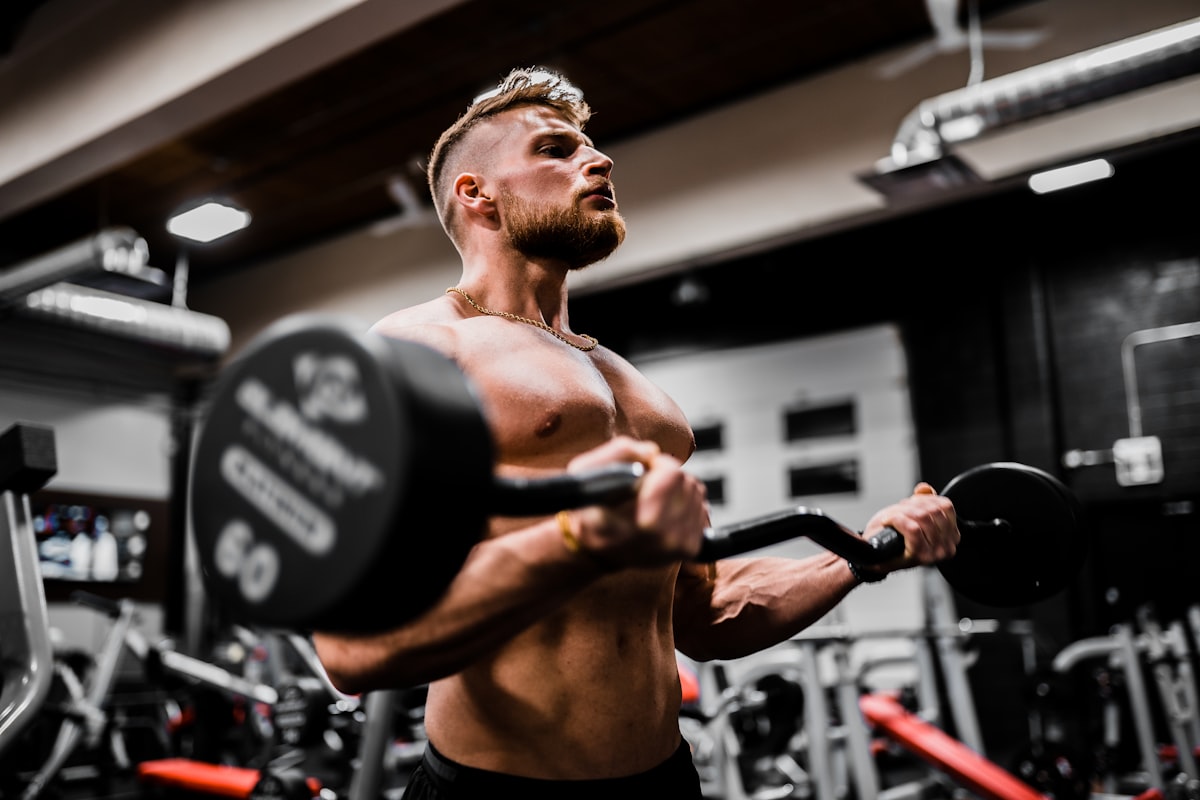
Building muscle isn’t about spending hours in the gym every day. It’s about applying the right stimulus, eating enough to support growth, and recovering well. If you’ve been training for months and still not seeing size gains, the problem is almost certainly one of these three factors — and this guide will help you identify which one.
Breadcrumb: Blog › Fitness › How to Build Muscle Fast: The Evidence-Based Guide
What Does “Building Muscle” Actually Mean?
Muscle growth — technically called muscle hypertrophy — is the increase in the size of muscle fibres in response to mechanical tension, metabolic stress, and muscle damage. When you lift weights, you create micro-tears in muscle tissue. During recovery, your body repairs and reinforces those fibres, making them larger and stronger.
The key insight: training creates the signal. Sleep and nutrition provide the raw materials. You need both.
The Three Pillars of Muscle Growth
1. Training Volume and Intensity
Research consistently shows that 10–20 working sets per muscle group per week is the optimal range for most lifters. Below 10 sets per week, growth is suboptimal. Above 20, recovery suffers.
Intensity matters too. Most of your sets should be taken within 1–3 reps of failure. This is what actually recruits the high-threshold motor units — the fibres with the most growth potential. Training light with plenty of reps in reserve leaves those fibres untouched.
This is also why progressive overload is non-negotiable. If you’re not consistently adding weight, reps, or sets over time, your muscles have no reason to grow.
2. Nutrition: You Can’t Build Without the Materials
Muscle is made of protein. To build more of it, you need to be in positive nitrogen balance — meaning you’re consuming more protein than your body breaks down. Aim for 1.6–2.2g of protein per kilogram of bodyweight per day.
Calories matter too. Building muscle in a significant calorie deficit is very difficult. A modest surplus of 200–500 calories per day above your maintenance level is the sweet spot — enough to support growth without excessive fat gain.
3. Sleep and Recovery
Most muscle protein synthesis occurs during sleep — specifically during the deep sleep stages when growth hormone is released. Getting less than 7 hours per night can cut muscle growth by 50% even when training and nutrition are optimised.
Rest days aren’t optional. They’re where the adaptation happens. Aim for at least 2 full rest days per week, and don’t train the same muscle group on consecutive days.
The Best Exercises for Building Muscle
Compound movements should form the backbone of any hypertrophy programme. These exercises recruit the most muscle mass, allow you to use the heaviest loads, and produce the strongest hormonal response:
- Squat variations — back squat, front squat, goblet squat
- Hinge movements — deadlift, Romanian deadlift, hip thrust
- Horizontal push — bench press, dumbbell press, push-up
- Vertical push — overhead press, Arnold press
- Horizontal pull — barbell row, cable row, chest-supported row
- Vertical pull — pull-up, lat pulldown
Accessory work — isolation exercises like curls, lateral raises, and tricep extensions — is valuable for targeting specific muscles, but should come after the compounds, not replace them.
How Long Does It Take to Build Visible Muscle?
Most beginners can gain 1–1.5kg of muscle per month in their first year of consistent training. After that, the rate slows. Intermediate lifters might gain 0.5–1kg per month, and advanced lifters often see gains measured in kilograms per year, not month.
Realistic timelines: expect to see visible changes in body composition after 8–12 weeks of consistent training and nutrition. Significant, noticeable muscle mass takes 6–12 months of dedicated work.
Common Mistakes That Slow Muscle Growth
- Not tracking progress — if you don’t know what you lifted last week, you can’t beat it
- Skipping compounds — isolation work alone won’t build a strong, muscular physique
- Inconsistent protein intake — one high-protein day doesn’t make up for a week of low intake
- Programme hopping — switching programmes every few weeks prevents progressive adaptation
- Underestimating sleep — chronic sleep deprivation kills muscle growth
Build a Programme That’s Designed for Your Goals
The biggest accelerator of muscle growth isn’t a magic supplement or an advanced technique — it’s a well-structured programme that you actually follow consistently. Zerxus builds you a personalised hypertrophy programme based on your experience level, equipment, schedule, and goals — and adapts it every single session based on your performance.
Learn how to build a strength programme that actually works for you, or start with Zerxus from $9/month and let the AI do it for you.
Frequently Asked Questions
How many times a week should I train to build muscle?
Most research suggests 3–5 training days per week is optimal for muscle growth. Each muscle group should be trained at least twice per week to maximise protein synthesis. A 4-day upper/lower split or a 3-day full-body programme both work well.
Do I need to lift heavy to build muscle?
Not necessarily. Research shows that muscle can be built across a wide rep range (5–30 reps) provided sets are taken close to failure. However, heavier loads (5–12 rep range) tend to be more time-efficient and produce simultaneous strength gains.
Should I do cardio if I’m trying to build muscle?
Moderate cardio (2–3 sessions per week of low-to-moderate intensity) is compatible with muscle building and benefits cardiovascular health. High-volume or high-intensity cardio can interfere with recovery and should be kept separate from weight training by at least 6 hours.
What’s the best time to work out for muscle growth?
The best time to work out is when you can train consistently and put in maximum effort. Research shows a slight performance advantage in the afternoon due to higher body temperature and hormone levels, but consistency trumps timing every time.
Get the next one in your inbox.
Practical insights — no fluff, straight to your inbox.
Zerxus Coaching Team
Certified Strength & Conditioning Coaches
The Zerxus coaching team combines qualified personal trainers, certified strength coaches, and evidence-based sports science to build programmes that actually work. Every article is grounded in peer-reviewed research and practical coaching experience — no fads, no shortcuts.