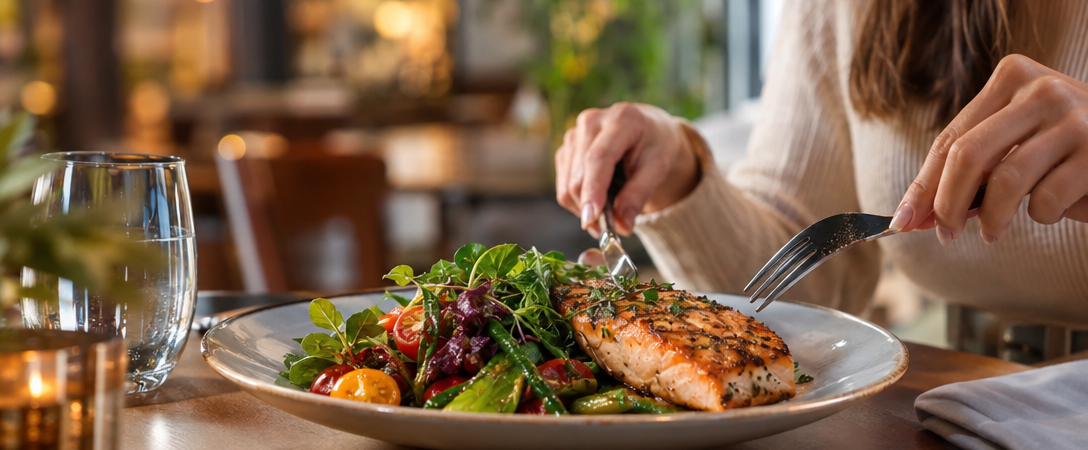
- You can eat out and stay on track by anchoring the meal around a protein source and a vegetable, then being sensible with the extras.
- The hidden calories are almost always in oils, sauces, bread, and drinks, not the main protein.
- Plan ahead: check the menu, decide roughly what you will order, and eat lighter earlier in the day if you know a big meal is coming.
- One restaurant meal will not undo your progress. A pattern of unplanned ones will.
- Alcohol is often the biggest silent calorie source of the night; account for it before the first drink, not after.
To eat at restaurants without ruining your diet, build the meal around a protein and a vegetable, watch the calorie-dense extras like oils, sauces, bread, and drinks, and plan the day around it. Eating out on a diet is not the problem people think it is; the trouble comes from treating every meal as unplanned and unlimited. With a little foresight, a restaurant meal fits comfortably into a fat-loss or muscle-building plan without any anxiety.
Where the calories actually hide
A grilled chicken breast or steak is rarely what blows a diet. The extras do it, and they are easy to miss:
- Cooking oils and butter. A pan-fried dish can carry a few hundred extra calories in fat you never see.
- Sauces and dressings. Creamy and sweet sauces add up fast; a generous drizzle can rival the protein for calories.
- Bread and nibbles. The basket you demolish before ordering is pure, unplanned intake.
- Drinks. Soft drinks, juices, and especially alcohol stack calories with no fullness in return.
Knowing this changes how you order. You are not avoiding restaurants; you are steering around the few things that carry most of the damage. If you want the wider logic of why total intake is what matters, our guide to the science of fat loss explains it plainly.
A simple ordering framework
You do not need to memorise menus. A repeatable order strategy handles almost any cuisine.
- Pick a lean protein as the anchor. Grilled, roasted, or baked chicken, fish, steak, or a bean or tofu dish.
- Add a vegetable or salad for volume and fullness, dressing on the side.
- Choose your indulgence deliberately. Decide in advance whether it is the chips, the bread, the dessert, or the drinks, and pick one, not all four.
- Ask for simple swaps. Sauce on the side, grilled instead of fried, extra veg instead of a second carbohydrate. Most kitchens are happy to help.
Protein and vegetables do the same job here they do at home: they fill you up for relatively few calories, which is exactly the principle behind our high-protein meals.
Plan the day, not just the meal
The best trick is boring: if you know a big dinner is coming, eat lighter and higher-protein earlier in the day so you have calories in the bank. That does not mean starving yourself, which usually backfires into overeating. It means a protein-forward breakfast and lunch, plenty of vegetables, and holding back a portion of your daily calories for the evening. You arrive hungry enough to enjoy the meal but not so ravenous that you eat the entire bread basket on autopilot.
| Situation | Sensible move |
|---|---|
| Big dinner planned | Protein-heavy, lighter breakfast and lunch; bank calories |
| Spontaneous meal out | Anchor on protein and veg, skip the extras you did not plan for |
| All-day event | Pick your one or two indulgences; drink water between drinks |
The alcohol question
Alcohol is often the quiet budget-wrecker. It carries meaningful calories, adds none of the fullness of food, and tends to loosen your resolve about everything else on the table. You do not have to abstain, but decide before you go how many drinks fit your day, alternate with water, and count them honestly. Deciding in the moment, after two drinks, rarely goes well.
Keep perspective
One restaurant meal, even an indulgent one, will not undo weeks of consistency. Fat loss and muscle gain respond to the weekly and monthly average, not a single Friday night. The people who struggle are not the ones who eat out occasionally; they are the ones who eat out constantly with no plan and then feel guilty. Enjoy the meal, get back to your normal routine the next day, and move on. Guilt-driven restriction the following day often causes more harm than the meal itself.
Frequently asked questions
How do you eat at restaurants without ruining your diet?
Anchor the meal around a lean protein and a vegetable, then be deliberate about the extras. Most hidden calories are in oils, sauces, bread, and drinks, so ask for sauce on the side, choose grilled over fried, and pick one indulgence rather than several. Plan the rest of your day lighter, and a restaurant meal fits your diet with room to spare.
Should I skip meals to save calories for a big dinner?
Eating lighter earlier is smart; skipping meals entirely usually is not. Arriving starving tends to lead to overeating and poor choices. Instead, keep earlier meals protein-heavy and lower in calories so you bank some room for the evening while staying reasonably full. You want to be comfortably hungry at dinner, not desperate enough to raid the bread basket on sight.
What is the best thing to order to stay on track?
Look for a grilled, roasted, or baked protein, chicken, fish, steak, tofu, or a bean dish, paired with vegetables or a salad with the dressing on the side. Keep sauces and fried extras modest, and choose one carbohydrate rather than two. This template keeps you full and controls calories across almost any cuisine you might face.
Does alcohol ruin a diet?
Not on its own, but it is easy to underestimate. Alcohol adds real calories without fullness and tends to weaken your food discipline. You can still drink and stay on track by deciding your limit before you go, alternating alcoholic drinks with water, and counting them honestly against your day. The problem is unplanned drinking, not a couple of accounted-for drinks.
The bottom line
Eating out is a skill, not a threat. Anchor on protein and vegetables, steer around the hidden calories in oils, sauces, bread, and drinks, plan your day, and keep perspective when one meal runs big. Zerxus keeps your training steady so a night out never derails the bigger picture. Build your plan at Zerxus.
Get the next one in your inbox.
Practical insights — no fluff, straight to your inbox.

Zerxus Coaching Team
Certified Strength & Conditioning Coaches
The Zerxus coaching team combines qualified personal trainers, certified strength coaches, and evidence-based sports science to build programmes that actually work. Every article is grounded in peer-reviewed research and practical coaching experience — no fads, no shortcuts.