- Working out how to gain weight as a hardgainer nearly always comes down to one thing: you are eating less than you think.
- “Fast metabolism” is usually a high, restless activity level plus under-eating, not a genetic curse.
- Use calorie-dense foods and liquid calories so you can hit a surplus without feeling painfully full.
- Track your intake honestly for two weeks; most hardgainers are shocked by how little they actually eat.
- Train hard and progressively, gain slowly, and give it months. Muscle is built at a modest, steady pace.
If you have ever typed “how to gain weight hardgainer” into a search bar, the answer is almost always the same: eat more than you currently do, consistently, and lift hard enough to turn those extra calories into muscle. Genuine “hardgainers” are rarely defeated by a freakish metabolism; they are defeated by under-eating without realising it, often paired with a naturally high, fidgety activity level. Fix the intake, keep training progressively, and the weight comes.
The truth about your “fast metabolism”
Most self-described hardgainers believe they eat loads and never gain. When they actually track it, a different picture appears: they eat big some days, tiny others, skip meals when busy, and burn a surprising amount through constant movement. The metabolism is not magic; it is a high maintenance level plus inconsistent eating.
This is good news, because it is fixable. Weight gain, like fat loss, obeys energy balance: eat more than you burn and you gain. If you are not gaining, you are not yet in a surplus, full stop. The lever is your intake, and it is entirely in your hands. Our guide to bulking versus cutting sets out how a controlled surplus should look.
Step one: track for two weeks
Before changing anything, measure. Log everything you eat honestly for one to two weeks and find your average. Nearly every hardgainer discovers their intake is lower and more erratic than they assumed. That average is your starting point.
- Find your current average. Track everything, including the days you barely eat.
- Add a surplus of roughly 250 to 500 calories. Enough to grow, small enough to limit fat gain.
- Hit that number every day. Consistency is where hardgainers usually fail; a big Monday and a starved Tuesday nets to nothing.
- Adjust monthly. If the scale is not moving up, add another couple of hundred calories.
Eat calorie-dense, not just more volume
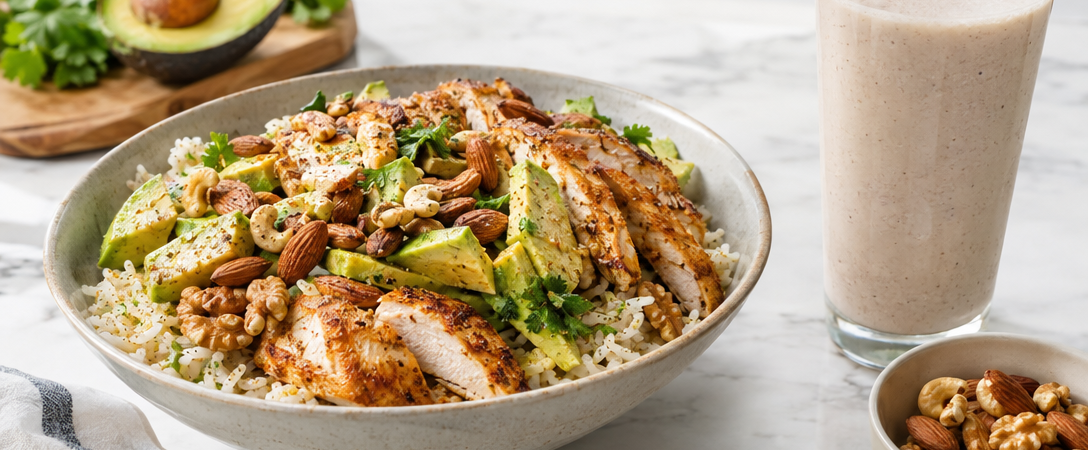
The classic hardgainer problem is fullness: you fill up on chicken breast and broccoli long before you hit your calories. The fix is to choose energy-dense foods that pack more calories into less space, and to drink some of your intake.
| Instead of | Reach for |
|---|---|
| Plain rice cakes | Oats with milk, nut butter, and honey |
| Endless salad volume | Olive oil, avocado, nuts, dried fruit |
| Water with meals | Milk, or a blended shake between meals |
| Lean-only cuts | A mix that includes some fattier proteins |
Liquid calories are your best friend. A shake made from milk, oats, banana, peanut butter, and a scoop of protein can add several hundred easy calories that never leave you bloated. If money is a concern, our notes on eating on a budget show how to add calories cheaply.
Do not forget the training
Eating in a surplus without training hard just adds fat. To turn those calories into muscle, you need a progressive overload plan: gradually add weight or reps over time so your body has a reason to build. This is the whole point of progressive overload. Focus on big compound lifts, train each muscle a couple of times a week, and push your working sets close to genuine effort. The surplus supplies the bricks; the training tells your body to lay them.
Set your expectations correctly
Muscle is built slowly. A realistic rate of gain for someone past the true beginner stage is around 0.25 to 0.5 kg of bodyweight per month if you want most of it to be muscle rather than fat. Faster than that and you are mostly adding fat. This means patience: judge progress over months, not days, and do not panic if the scale barely moves in a single week. Steady and sustained wins.
Frequently asked questions
How does a hardgainer gain weight and muscle?
By eating in a consistent calorie surplus and training hard with progressive overload. Track your intake for a couple of weeks, add roughly 250 to 500 calories a day above your average, and hit that number every day, not just occasionally. Use calorie-dense foods and liquid calories to reach the total without feeling stuffed, then let hard, progressive training turn the surplus into muscle.
Why can’t I gain weight even though I eat a lot?
Almost always because you eat less than you think, or less consistently. Big days followed by tiny ones net out to maintenance, and a naturally high activity level burns more than you realise. Track everything honestly for two weeks and you will usually find the real average is lower than expected. Raise it steadily and consistently, and the weight will start to move.
Should hardgainers use weight gainer shakes?
They can help, but a homemade shake often does the same job for less money. Blending milk, oats, banana, peanut butter, and protein powder adds several hundred easy calories without bloating you. Commercial gainers are simply convenient calories; check the label, as some are mostly sugar. The goal is dense, drinkable calories, whether shop-bought or made in your own kitchen.
How fast should a hardgainer gain weight?
Aim for roughly 0.25 to 0.5 kg per month if you want the gain to be mostly muscle. Faster gains tend to be largely fat, which you will only have to diet off later. Judge progress over months rather than weeks, and adjust your calories upward if the scale genuinely stalls. Patience and consistency beat aggressive, short-lived bulking every time.
The bottom line
Being a hardgainer is a solvable eating problem, not a life sentence. Track your intake, add a steady surplus with calorie-dense foods and shakes, train with progressive overload, and give it months. The scale will move once you stop under-eating without realising it. Zerxus keeps your training progressing so your surplus builds muscle, not just weight. Build your plan at Zerxus.
Get the next one in your inbox.
Practical insights — no fluff, straight to your inbox.
Zerxus Coaching Team
Certified Strength & Conditioning Coaches
The Zerxus coaching team combines qualified personal trainers, certified strength coaches, and evidence-based sports science to build programmes that actually work. Every article is grounded in peer-reviewed research and practical coaching experience — no fads, no shortcuts.