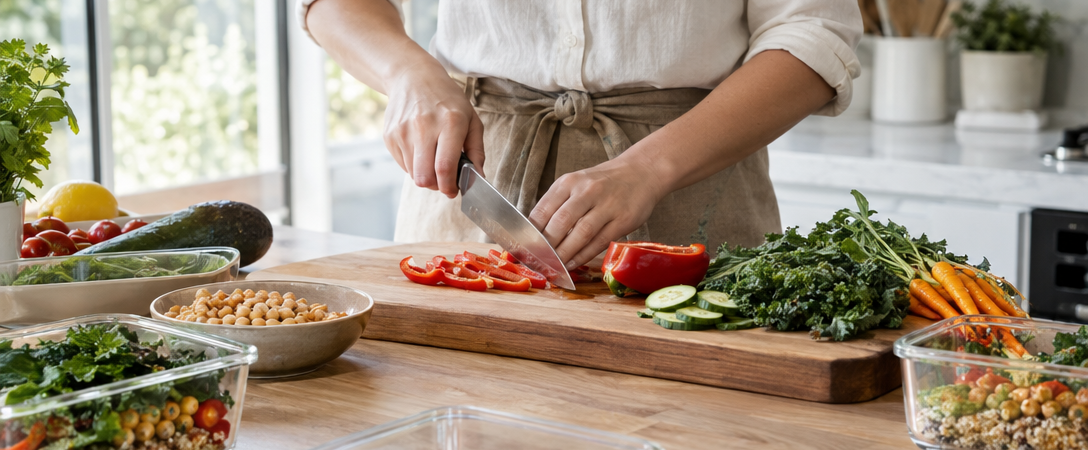
- Good meal prep for lifters is about hitting your protein and calorie targets on autopilot, not eating cold chicken from a tub for a week.
- Prep components, not full rigid meals: a protein, a carbohydrate, a vegetable, and a sauce that you mix and match.
- Aim to lock in a protein source at every meal; that single habit does most of the work.
- Cook two or three days ahead rather than seven so food stays appetising and you actually eat it.
- A weekend system of two to three hours can cover most of your week and remove daily decision fatigue.
To meal prep to build muscle, batch-cook a few interchangeable components, a protein, a starchy carbohydrate, a vegetable, and a sauce, then assemble them into meals through the week so you hit your protein and calorie targets without thinking. Good meal prep for lifters is less about eating identical grey meals for seven days and more about removing the daily friction that makes people skip protein or grab something that derails their plan.
Why prep beats willpower
Building muscle needs a small calorie surplus and consistent protein, usually around 1.6 to 2.2 g per kg spread across the day. The hard part is never one meal; it is doing this five, six, seven days in a row when you are tired, busy, or out of the house. Every time you have to decide what to eat from scratch, you leave a gap for a convenient, low-protein choice to slip in.
Prep closes that gap. When the fridge already holds cooked chicken, rice, and roasted vegetables, hitting your numbers takes minutes. If you want the full picture of what a muscle-building diet looks like, our guide to a nutrition plan for muscle growth sets the targets this system delivers.
The component method
Rigid full-meal prep fails because you get bored and quit. The fix is to cook components and combine them. Prep three of each and you can build a week of varied plates.
| Component | Examples | Rough role |
|---|---|---|
| Proteins | Chicken thighs, lean mince, salmon, tofu, eggs | The anchor of every meal |
| Carbohydrates | Rice, potatoes, pasta, oats | Fuel for training and recovery |
| Vegetables | Roasted mixed veg, frozen greens, salad bases | Fibre, micronutrients, fullness |
| Sauces | Salsa, pesto, low-sugar teriyaki, yoghurt-based dressings | The thing that stops boredom |
Chicken with rice and salsa on Monday becomes chicken with potatoes and pesto on Tuesday. Same prep, different meal. Sauces do a surprising amount of the heavy lifting for adherence.
A simple weekend system
You do not need to cook all seven days at once; food gets tired and so do you. Prepping two or three days ahead keeps everything fresh enough that you look forward to it. A realistic weekend block looks like this:
- Plan and shop (30 minutes). Pick two proteins, two carbohydrates, two vegetables, and a couple of sauces. Buy for three to four days.
- Cook proteins (45 minutes). Oven-bake or pan-cook in bulk while something else roasts.
- Cook carbohydrates and vegetables (30 minutes). Rice cooker or a big tray of roasted veg does this hands-off.
- Portion and store (20 minutes). Weigh into containers so you know your numbers, and label anything for the freezer.
Repeat a shorter version midweek. Two to three hours total covers most of your eating, and the decision fatigue disappears.
Getting protein into every meal
If you do one thing, anchor a protein source to every meal and snack. That single habit tends to sort out the rest of the diet, because protein is filling and hard to overeat. Keep fast options on hand for the days prep runs out: tinned fish, Greek yoghurt, pre-cooked lentils, a shake, or eggs. For ideas that travel and store well, our list of high-protein meals is a good starting point, and if money is tight, eating on a budget shows how to keep protein high without spending a fortune.
Common prep mistakes
- Prepping seven days at once. Day six tastes like cardboard and you order a takeaway. Cook in shorter cycles.
- No sauce plan. Boredom is the number one reason prep gets abandoned. Vary the flavour, not the effort.
- Guessing portions. If you are not weighing at least your protein and carbohydrate, your surplus or deficit is a guess.
- Forgetting vegetables. They add fibre and volume for very few calories, which keeps you full and regular.
Frequently asked questions
How do you meal prep to build muscle?
Batch-cook interchangeable components: a protein, a carbohydrate, a vegetable, and a sauce, then assemble them into meals through the week. Anchor a solid protein source to every meal, weigh your portions so you hit a small calorie surplus, and cook two to three days ahead rather than a full week so the food stays appetising and you keep eating it.
How many days of food should I prep at once?
Two to three days is the sweet spot for most people. Prepping a full week means the later meals taste stale and often get binned, which wastes your effort. A short weekend cook plus a quick midweek top-up keeps everything fresh, covers the bulk of your eating, and still removes most of the daily decision-making.
Can I meal prep for fat loss too?
Yes, the same system works; you simply portion for a calorie deficit instead of a surplus. Keep protein high to protect muscle, lean on vegetables for fullness, and be a little tighter with your carbohydrate and fat portions. The component method makes it easy to scale portions up or down depending on your current goal.
Does prepped food lose nutrients?
Not to any degree that matters for your results. Cooking and storing food causes minor losses in some vitamins, but the difference is small and easily covered by eating a varied diet with plenty of vegetables. The consistency you gain from prepping far outweighs any trivial nutrient loss from a couple of days in the fridge.
The bottom line
Meal prep is not punishment; it is a system that makes hitting your protein and calories the path of least resistance. Cook components, keep a sauce on hand, prep a few days at a time, and put a protein in every meal. Zerxus keeps your training and your targets aligned so your effort in the kitchen shows up in the gym. Build your plan at Zerxus.
Get the next one in your inbox.
Practical insights — no fluff, straight to your inbox.

Zerxus Coaching Team
Certified Strength & Conditioning Coaches
The Zerxus coaching team combines qualified personal trainers, certified strength coaches, and evidence-based sports science to build programmes that actually work. Every article is grounded in peer-reviewed research and practical coaching experience — no fads, no shortcuts.