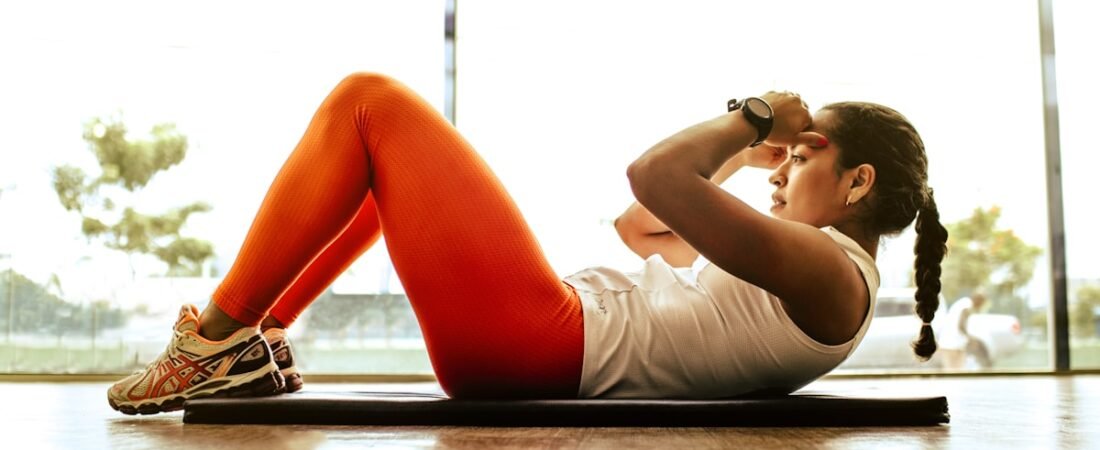
- Women produce roughly 10–20 times less testosterone than men, making dramatic muscle bulk extremely unlikely without years of deliberate, high-volume training.
- Heavy compound lifts — squats, deadlifts, presses — are more effective for body composition than high-rep, low-weight circuits.
- Cardio burns calories during the session; muscle tissue raises your resting metabolic rate, meaning lifting changes the equation over time.
- Soreness is not a reliable measure of a good workout — progressive overload tracked through weight or reps is.
- Eating enough protein and being in a modest calorie surplus are prerequisites for adding significant muscle — it doesn’t happen by accident.
Most women who avoid the weights room are avoiding it for the wrong reasons. The five myths below have genuinely held people back from training that would make them stronger, leaner, and more resilient — so let’s dismantle them with actual physiology.
Myth 1: Lifting Heavy Will Make You Bulky
This myth falls apart once you understand testosterone. Men produce roughly 10–20 times more testosterone than women, and testosterone is the primary hormonal driver of large-scale muscle growth. The broad, high-volume bodybuilder physique most women want to avoid requires years of structured, high-calorie training — often with a significant calorie surplus maintained consistently. It does not happen from picking up a barbell twice a week.
What lifting actually produces in most women is the look they’re already after: visible muscle definition under reduced body fat. That requires building muscle through progressive overload — not avoiding it. The stimulus that achieves this most efficiently is 3–5 sets of 6–10 reps at a challenging load, performed consistently on compound movements like squats, Romanian deadlifts, and pressing variations.
High-rep, low-weight circuits — often marketed as the more “feminine” option — don’t provide enough mechanical tension to drive meaningful muscle adaptation. You get elevated heart rate and fatigue, but limited structural change. Progressive resistance is the tool for a stronger, more defined physique. There is no physiological shortcut around it.
Myth 2: Cardio Is the Best Tool for Fat Loss
Cardio burns calories. Strength training changes the system that burns them. Here’s how the two approaches compare:
| Factor | Steady-state cardio | Strength training |
|---|---|---|
| Calories burned per session | Higher during the session | Moderate during the session, elevated post-exercise |
| Effect on resting metabolic rate | Minimal long-term change | Increased — muscle tissue is metabolically active at rest |
| Muscle retention in a calorie deficit | Poor — cardio alone accelerates muscle loss | Strong — resistance training is the primary signal to preserve muscle |
| Long-term body composition impact | Limited without resistance training | Favourable — more muscle changes the calorie equation over time |
The most effective approach combines both. Cardio supports cardiovascular health and daily calorie balance; lifting preserves and builds the muscle that keeps your metabolism working in your favour. Dropping strength training in favour of more cardio is one of the most common and costly mistakes in female body composition programming.
Myth 3: You Need to Feel Sore to Know the Workout Worked
Delayed onset muscle soreness (DOMS) reflects novelty, not quality. You feel sore after your first squats in months because the movement pattern, load, and range of motion are unfamiliar to your tissues. As your body adapts, the same session produces less soreness — even as your strength continues to improve. A well-adapted lifter can deadlift a personal best and wake up the next morning feeling completely fine.
The metrics that actually tell you a session worked are measurable: you lifted 2.5 kg more than last week, completed an extra rep at the same weight, or hit the same load with noticeably better form. Those are signs of progressive overload — the actual driver of adaptation.
Chasing soreness as a goal is actively counterproductive. It pushes beginners to add excessive volume, change exercises too frequently to allow adaptation, and increases the risk of overuse injury. Train to progress, not to hurt.
Myth 4: Women Should Train Differently to Men
The fundamental principles of strength training — progressive overload, compound movements, sufficient volume and recovery — apply equally to both sexes. The physiology of muscle adaptation is not gendered.
- The same core movements apply. Squats, hip hinges (deadlifts, Romanian deadlifts), horizontal and vertical pushes and pulls, and loaded carries form the backbone of effective programming for everyone.
- Progressive overload works the same way. Add weight, add reps, or add sets over time — the mechanism of adaptation does not change based on sex.
- Protein targets are the same per kilogram of bodyweight. Approximately 1.6–2.2 g of protein per kg of bodyweight daily is the evidence-based range for supporting muscle protein synthesis in both men and women.
- Recovery timelines are similar. 48–72 hours between sessions targeting the same muscle group is appropriate for both, adjusted for training age and volume.
- Hormonal fluctuations across the menstrual cycle can affect energy, strength output, and recovery. Research suggests strength and pain tolerance may be higher in the follicular phase (roughly the first two weeks of the cycle) and fatigue may be more pronounced in the luteal phase. Tracking how you feel across the month and adjusting intensity accordingly is worth doing — but this is individual variation to work with, not a reason to follow a fundamentally different programme.
Programming adjustments are based on individual factors — training history, goals, injury history, schedule — not on being a woman.
Myth 5: You’ll Get Stronger Without Eating Enough
Muscle protein synthesis requires two things: a training stimulus and the raw material to respond to it. When calorie intake is chronically low, your body doesn’t have the resources to repair and build muscle tissue after training. Recovery stalls, strength plateaus, and in a prolonged deficit you can lose muscle even while training consistently — the opposite of what you’re working toward.
A practical starting point for protein is 1.6–2.0 g per kg of bodyweight daily, spread across meals. For a 65 kg woman, that’s roughly 104–130 g of protein per day from sources like chicken, fish, eggs, Greek yoghurt, and legumes. Total calorie intake matters too — you cannot build meaningful muscle in a significant deficit over the long term.
Significant muscle gain also requires a modest calorie surplus — typically 200–300 kcal above maintenance, sustained over weeks and months. Small, deliberate increases in body weight driven by muscle gain are a sign the programme is working. Undereating doesn’t make results faster; it makes them impossible.
A Note on Pain, Injury, and Starting Safe
This article is general fitness education, not medical advice. If you have a pre-existing injury, joint pain, osteoporosis, or are pregnant or postpartum, please consult a qualified medical professional or physiotherapist before starting a lifting programme. A good coach can also help you modify exercises to suit your individual needs and starting point. This isn’t a disclaimer to skip — it’s genuinely important guidance.
Frequently asked questions
How many days a week should a beginner woman lift weights?
Two to three full-body sessions per week is the right starting point. This frequency provides enough stimulus to drive adaptation and enough recovery time between sessions for that adaptation to occur. A simple structure: squat pattern, hip hinge, upper push, upper pull — each session, progressing load or reps week to week. As your training age increases and you can handle more volume, a four-day upper/lower split becomes appropriate.
Will lifting weights make me gain weight on the scale?
Possibly in the short term, and that’s not a bad sign. Lifting increases muscle glycogen storage and can cause minor water retention as tissue repairs — neither is fat gain. If you’re in a calorie deficit, scale weight will likely fall over time. If you’re eating at maintenance or a slight surplus to build muscle, scale weight may rise slowly — and if training is consistent and protein intake is adequate, that rise reflects new muscle, not fat accumulation.
Is it safe to lift heavy weights as a complete beginner?
Yes, with progressive loading and sound technique. Start with weights where the last two reps of a set are genuinely challenging but form stays clean — this will feel light initially, and that’s appropriate. Add load only when you can complete the target reps with good form across all sets. If you’re unsure of technique, a few sessions with a qualified coach at the outset saves significant time and meaningfully reduces injury risk.
Do women need different supplements to men for strength training?
No. The supplements with the strongest evidence base — creatine monohydrate and protein powder as a convenient food source — are equally relevant and effective for women. Creatine is notably underused by women despite consistent evidence supporting its effect on strength and muscle output; 3–5 g daily is the standard dose. Iron levels are worth monitoring through routine bloodwork given the potential impact of menstruation on stores, but that’s a conversation with your GP, not a reason to self-prescribe a supplement stack.
How long before a woman starting strength training sees visible results?
Strength improvements are typically noticeable within 4–6 weeks, driven largely by neural adaptations — your nervous system learns to recruit muscle more efficiently before significant tissue growth occurs. Visible changes in muscle definition and body composition generally become apparent after 8–12 weeks of consistent training and adequate nutrition. Consistency, protein intake, sleep quality, and your starting point all affect the timeline.
The weights room is a tool — use it deliberately
None of these myths are harmless. They push women toward less effective training, less food than they need, and a relationship with the gym built on anxiety rather than intent. The physiology is clear: heavy compound lifts, progressive overload, and sufficient nutrition produce results. Everything else is noise.
Drop the myths, pick up the programme, and measure what actually matters — the weight on the bar and the reps in the log. Zerxus builds personalised strength programmes that apply exactly these principles, adapted to where you are right now.
Get the next one in your inbox.
Practical insights — no fluff, straight to your inbox.
Zerxus Coaching Team
Certified Strength & Conditioning Coaches
The Zerxus coaching team combines qualified personal trainers, certified strength coaches, and evidence-based sports science to build programmes that actually work. Every article is grounded in peer-reviewed research and practical coaching experience — no fads, no shortcuts.