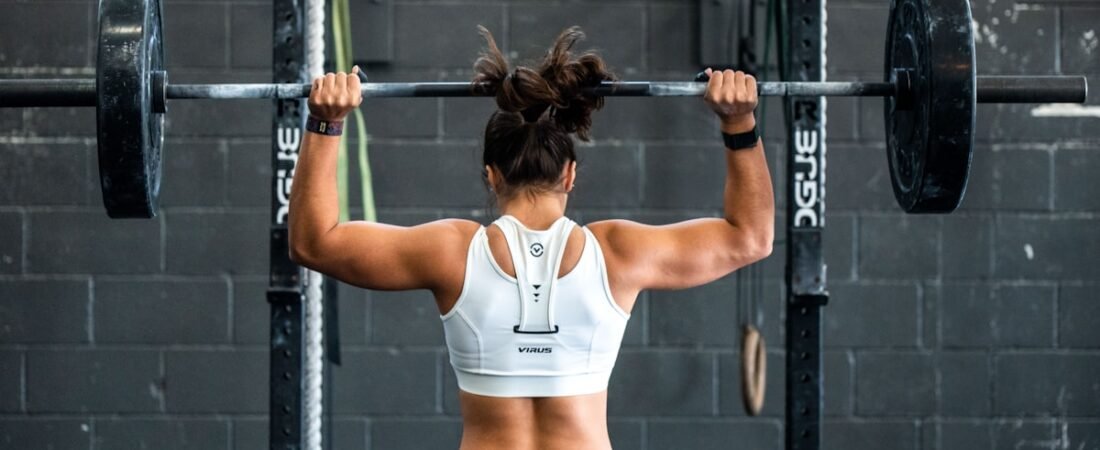
- The overhead press builds the shoulders, upper traps and triceps in a way isolation work cannot match.
- A vertical bar path over mid-foot and a hard brace are the two non-negotiables of a strong press.
- Progress is slower than the bench — expect small jumps and be patient with them.
- Most shoulder complaints from pressing come from technique or volume errors, not the lift itself.
- Press one to two times a week and pair it with pulling work to keep the joint healthy.
The overhead press is the most neglected of the big compound lifts, and that is a real missed opportunity. Pressing a loaded bar from your shoulders to a locked-out position overhead builds powerful shoulders, thick upper traps and triceps that no isolation exercise can replicate, because it lets you handle more weight than any single-joint shoulder movement. Done with a vertical bar path and a hard brace, it is one of the best upper-body strength builders available.
Muscles the overhead press works
The prime movers are the anterior and medial deltoids, the upper traps and the triceps. The serratus anterior and the core work hard too, the latter bracing isometrically to keep you rigid under a load held above your head. Because the movement allows heavier loading than lateral raises or cable work, it produces superior strength and size in the shoulders over time — the joint simply responds to the demand. That does not make accessory work redundant; movements like lateral raises still earn their place for building width, but they complement the press rather than replace it.
Setup and technique
Grip and starting position
Grip the bar just wider than shoulder-width with a full grip, thumb wrapped around. The bar rests on your front delts with your elbows slightly forward, not flared out wide, and your wrists stay neutral or only slightly extended. Stand with your feet about shoulder-width apart and brace your core before the bar moves.
The press itself
- Take a breath and brace your core hard.
- Press the bar straight up; as it clears your forehead, push your head through the arms.
- Lock out with the bar directly over your mid-foot and your arms fully extended.
- Lower the bar under control back to your front delts.
The single most important detail is that the bar travels vertically. Because your head is in the way, you move it back slightly as the bar rises and then bring it forward once the bar passes — the bar stays over mid-foot, and your body works around it. Regulating effort with RPE helps you judge when to add weight and when a set is already hard enough.
Common mistakes
| Fault | Why it happens | Fix |
|---|---|---|
| Excessive lower-back arch | Poor bracing or stiff upper back | Brace harder; squeeze glutes; check mobility |
| Bar drifting forward | Head not moving through | Keep the path vertical over mid-foot |
| Not locking out | Rushing or under-recovered | Finish every rep with full elbow extension |
| Too much leg drive | Turning a strict press into a push press | Keep the legs quiet unless training the push press deliberately |
A full lockout matters more than it looks — it is where the triceps and upper traps finish the work and where the shoulder settles into a stable position. Cutting reps short leaves strength and size on the table.
The myth that overhead pressing wrecks shoulders
Many lifters avoid the overhead press because they believe it is inherently bad for the shoulders. When it is done correctly, the opposite is true — pressing overhead builds strength and stability through a full range that keeps the joint healthy. The problems people blame on the lift almost always come from technique faults (a bar drifting forward, an over-arched back, an incomplete lockout) or programming errors (too much volume with too little recovery). Fix the execution and the volume before you write the movement off. If overhead range is genuinely limited, that is usually a mobility issue worth addressing rather than a reason to stop pressing — our guide on mobility versus flexibility explains why active overhead control matters more than passive stretch.
Overhead press variations
- Seated dumbbell press: removes leg drive, challenges stability and exposes left-to-right imbalances.
- Arnold press: the rotation adds range and extra anterior delt work.
- Push press: a deliberate dip and drive of the legs to move more weight — excellent for overloading the top end.
- Landmine press: a shoulder-friendly angle that suits anyone with overhead mobility restrictions.
Rotate a variation in when the strict press stalls or when you want to train a weak point, but keep the barbell overhead press as the main lift for tracking progress.
Programming the overhead press
Press one to two times a week. Progress is slower than on the bench, so add weight in smaller increments — jumps as small as 1.25kg per side keep the lift moving without stalling. Pair your pressing with face pulls and band pull-aparts to keep the shoulder joint healthy and balanced against all that pushing. Apply progressive overload patiently, and fit the press into a complete plan alongside your other compounds — an 8-week strength programme is a good structure to build it into. Balancing pushing with plenty of pulling and some direct chest work, as covered in our guide to building a bigger, stronger chest, keeps the whole upper body progressing together.
Frequently asked questions
Should I press seated or standing?
Standing is generally preferred because it recruits the core and builds total-body tension, making it the more complete strength exercise. Seated pressing is useful when you want to isolate the shoulders more directly, or when lower-back discomfort makes standing pressing uncomfortable. Most lifters benefit from making the standing press their main version.
Why is my overhead press so much weaker than my bench?
This is completely normal. A typical overhead press sits at roughly 60–70% of your bench one-rep max, because the press removes the back arch and leg drive the bench allows and works through a longer, less mechanically favourable range. If yours is well below that band, shoulder mobility or technique is the likely limiter rather than raw strength.
Can the overhead press cause shoulder injuries?
Done correctly, the overhead press is shoulder-friendly and often improves shoulder health. Most pressing-related shoulder issues come from a forward-drifting bar, an over-arched back, an incomplete lockout, or simply too much volume without enough recovery. Address technique first, then check your programming, before concluding the lift itself is the problem.
How often should I train the overhead press?
Once or twice a week suits most lifters. One heavier session builds strength, and an optional second lighter session adds volume and technique practice. Because the press progresses slowly and the shoulders take a lot of indirect work from other lifts, more frequency is rarely needed — quality and patience matter more here than sheer volume.
Build powerful shoulders
The overhead press rewards precision and patience: a vertical bar path, a hard brace, a full lockout, and small increments added over time. Keep it in your programme, balance it with pulling work, and your shoulders and upper back will build strength that carries into every other lift. If you want that press slotted into a plan built around your goals and equipment, start at Zerxus.
Get the next one in your inbox.
Practical insights — no fluff, straight to your inbox.
Zerxus Coaching Team
Certified Strength & Conditioning Coaches
The Zerxus coaching team combines qualified personal trainers, certified strength coaches, and evidence-based sports science to build programmes that actually work. Every article is grounded in peer-reviewed research and practical coaching experience — no fads, no shortcuts.