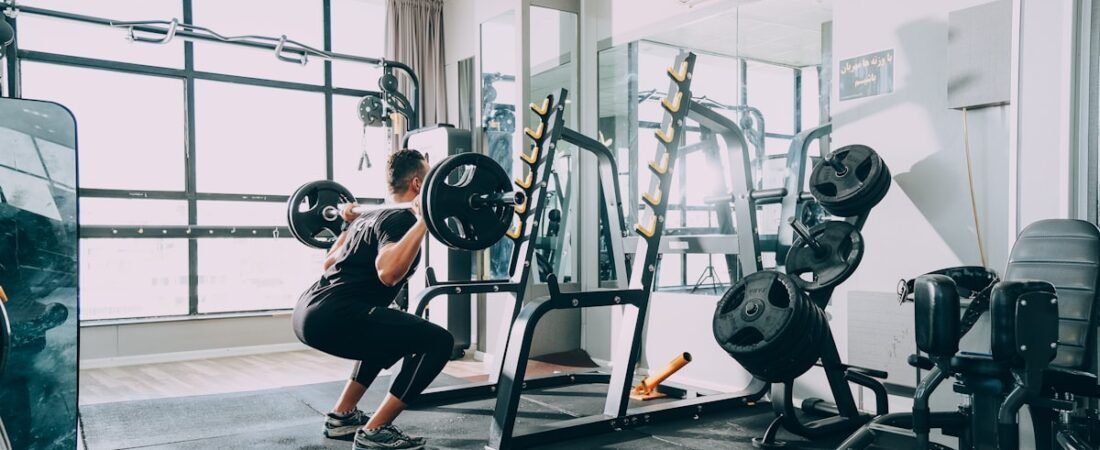
- Dumbbell and barbell training are both excellent; the better choice depends on your goal, not on which is superior.
- Barbells win for maximal strength and small, precise load jumps on the big compound lifts.
- Dumbbells offer a longer range of motion, fix left-right imbalances and are safer to train alone.
- When size is the goal, matched effort and volume produce similar growth from either tool.
- The strongest programmes use barbells for primary lifts and dumbbells for accessory work.
In the dumbbell vs barbell debate, neither tool is simply better: both build strength and muscle, and the right pick depends on your goals, experience and setup. Barbells let you load the most weight and progress in tiny steps, which suits maximal strength. Dumbbells give a longer range of motion and train each side independently, which suits balance and joint-friendly hypertrophy work.
The case for barbell training
A barbell lets you load more weight than any other free-weight tool, which makes it the standard for building maximal strength. The big three, the squat, bench press and deadlift, are all barbell lifts, and they anchor most evidence-based strength programmes. A barbell also lets you add as little as one to two kilograms at a time, so progressive overload stays smooth rather than jumping in big, awkward leaps.
- Best tool for developing a maximal one-rep strength.
- Small, precise load increments for steady progression.
- More stable, so heavier loads come with less stabiliser fatigue.
- The foundation of powerlifting, Olympic lifting and strength sport.
- Efficient: one compound lift trains several muscles at once.
The case for dumbbell training
Dumbbells give each limb its own job, which exposes and corrects left-right imbalances that a barbell can hide. They also allow a longer range of motion on presses and flyes, and they are safer to push hard on when you train without a spotter. For anyone building a home gym, an adjustable pair covers a huge amount of ground for the space they take.
- Greater range of motion on pressing and fly movements.
- Each side works alone, so imbalances get addressed.
- Safer for solo training with no spotter needed.
- Often kinder to cranky shoulders and wrists thanks to free rotation.
- Ideal for accessory and isolation work.
Head to head on key lifts
| Lift | Barbell edge | Dumbbell edge |
|---|---|---|
| Bench press | Heavier loads and top-end strength | Longer range and a deeper pec stretch |
| Rows | More total load through the back | Longer range and stronger per-side lat drive |
| Shoulder press | Great for pressing strength | Natural wrist rotation, easier on the shoulders |
Most complete programmes simply use both. A barbell bench as the primary lift plus dumbbell work as an accessory covers strength and stretch at once, and the same logic applies across a full back training plan or your overhead pressing.
The myth: one tool builds more muscle
The common claim that barbells always build more muscle does not hold up. When effort and volume are matched, hypertrophy outcomes are similar between the two, because muscle responds to tension and hard sets rather than to the shape of the handle. Barbells keep a clear edge for maximal strength, but for pure size the tool matters far less than how hard and how often you train. Choose based on the goal in front of you, not on gym folklore.
The practical answer: use both
The most effective approach is usually to build sessions around barbell compounds and fill in with dumbbell accessories. That combination maximises strength, chips away at imbalances and keeps training varied. A common template opens with a heavy barbell squat, bench or deadlift for low reps, then adds dumbbell presses, rows and single-leg work for higher reps to round out the session. If you can only pick one, let your main goal decide: barbells if you are chasing raw strength, dumbbells if you want balance, joint comfort and simple hypertrophy at home. Neither choice is a mistake, so pick the tool that fits your training and get on with the work.
Frequently asked questions
Can you build the same amount of muscle with dumbbells as barbells?
For the most part, yes. Research suggests hypertrophy is similar between dumbbells and barbells when effort and weekly volume are matched, because growth is driven by hard, challenging sets rather than the specific implement. The clearest difference is at the top end of strength, where barbells let you load more weight and therefore have the advantage for maximal one-rep performance.
Are dumbbells better for beginners?
Dumbbells can be gentler for beginners thanks to a shorter learning curve and lower injury risk when training alone. That said, learning barbell lifts early builds a foundation that pays off for years. A sensible start uses dumbbells to develop control and confidence while gradually introducing the main barbell movements, rather than treating it as one or the other.
Which is better for a home gym?
For most home setups, a pair of adjustable dumbbells offers the best mix of value, versatility and space efficiency. They cover pressing, rowing, hinging, squatting and isolation work in a single compact kit. A barbell and plates are a worthwhile addition once your budget and floor space allow, especially if heavy squats and deadlifts become a priority.
Get the right tool mix for you
Dumbbells or barbells, the winning setup is the one matched to your goals and your gym. If you would rather have that decided and programmed around your equipment and experience, we build it for you with AI precision and human coaching at Zerxus.
Get the next one in your inbox.
Practical insights — no fluff, straight to your inbox.
Zerxus Coaching Team
Certified Strength & Conditioning Coaches
The Zerxus coaching team combines qualified personal trainers, certified strength coaches, and evidence-based sports science to build programmes that actually work. Every article is grounded in peer-reviewed research and practical coaching experience — no fads, no shortcuts.