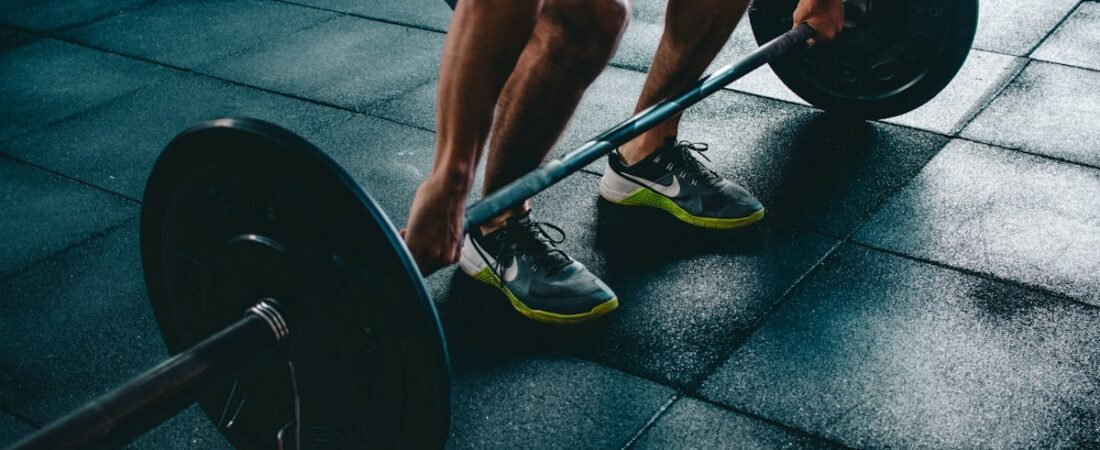
- Kettlebell training builds strength, power, conditioning and grip at once, and a single bell is enough to start.
- The offset weight demands more stabilisation than a dumbbell and allows ballistic lifts a barbell cannot.
- Five movements cover the basics: swing, goblet squat, Turkish get-up, single-arm row and press.
- Most men start swings around 16kg and presses around 12kg; most women around 12kg and 8kg.
- Beginners and intermediates can build real muscle with kettlebells before ever touching a barbell.
Kettlebell training is one of the most versatile ways to build strength, power and conditioning with a single tool, which makes it ideal for home training and for beginners through to advanced athletes. The offset load asks more of your stabilising muscles than a dumbbell, and even one bell is enough for a full programme. Here is how to start safely and progress sensibly.
Why train with kettlebells?
A kettlebell carries its weight below the handle, so the load pulls on the arm and forces the body to stabilise through every rep. That is a different, and often more useful, demand than a balanced dumbbell. Ballistic lifts such as swings, cleans and snatches are simply not possible with a barbell, and they develop explosive power alongside strength. Because one bell trains strength, power, conditioning and grip together, it is a remarkably efficient purchase for a small space or a tight budget.
The five foundational movements
1. Kettlebell swing
The most important kettlebell exercise and a pure hip hinge. The swing is driven by a sharp snap of the hips, not by lifting with the arms, and it is not a squat. Master it and every other ballistic lift becomes easier. Work in the range of three to five sets of fifteen to twenty reps.
2. Goblet squat
Hold the bell by the horns at chest height and squat. The front-loaded position counterbalances you into an upright torso and teaches clean squat mechanics, which makes it the best squat variation for most beginners. If you want to refine the pattern, the ultimate guide to squats covers it in detail. Aim for three to four sets of ten to fifteen.
3. Turkish get-up
A slow, deliberate journey from lying to standing while holding the bell overhead. It trains shoulder stability, core strength and mobility in one movement. Start with no weight, progress to balancing a shoe on your fist, then add load. Two to three reps per side is plenty.
4. Single-arm row
Hinge forward with one hand supported and row the bell to your hip. It builds the back and biceps and works well when barbell rows are not an option; the complete back training guide shows how to place it in a session. Three to four sets of ten to fifteen per side.
5. Kettlebell press
Press the bell overhead from the rack position, where it rests against your forearm. The neutral grip and freer path are often kinder to the shoulder than a barbell press; compare the setup. Three sets of eight to twelve per side.
A sample three-day programme
| Day | Session |
|---|---|
| Day 1 | Swings 5×15, goblet squat 4×12, get-up 3×2/side, single-arm row 3×12/side |
| Day 2 | Rest or an easy walk |
| Day 3 | Swings 5×20, goblet squat 4×15, press 3×10/side, farmer carry 3×30m |
| Day 4 | Rest |
| Day 5 | Swings 6×15, get-up 3×3/side, single-arm row 4×12, press 3×12/side |
How to progress once the basics feel easy
The five movements above will carry a beginner a long way, but they only keep working if you make them harder over time. Since you may own just one or two bells, most of your progression comes from reps, sets, tempo and rest rather than from constantly buying heavier weights. Add reps within a set, add a set to the exercise, slow the lowering phase of the goblet squat and press, or shorten the rest between rounds to raise the conditioning demand. Once a bell genuinely feels light across every lift, that is the signal to add a heavier one. A common mistake is treating swings as an all-out sprint every session; instead, keep most sets crisp and powerful with a rep or two left in reserve, and save true maximum efforts for occasional test days. Grip often fatigues before the target muscles, so chalk and a few dedicated carries help you train the intended pattern rather than being cut short by your hands.
Frequently asked questions
What size kettlebell should we start with?
As a general guide, most men begin with 16kg for swings and 12kg for presses and get-ups, while most women begin with 12kg for swings and 8kg for presses. These are starting points, not rules, so adjust to your current strength. If you are buying a single bell for a home setup, an adjustable kettlebell is the most cost-effective way to cover several loads.
Can we build muscle with just kettlebells?
Yes, especially for beginners and intermediates. Kettlebells provide enough mechanical tension for meaningful muscle growth when you train close to failure and progress the work over time. As you advance, adding heavier bells or combining kettlebells with barbell work keeps the stimulus climbing so progress does not stall.
Is kettlebell training good for fat loss?
It can be very effective. Swing-based circuits carry a high metabolic demand, so paired with a calorie deficit and adequate protein, kettlebell work supports fat loss while helping preserve muscle. Fat loss is still decided mostly by your diet, though, as the science of fat loss explains; the kettlebell is the training half of the equation.
Programme your kettlebell training
A single bell goes a long way once the sessions are structured and progressed properly. To get a kettlebell programme that adapts to your equipment and progress, build yours at Zerxus.
Get the next one in your inbox.
Practical insights — no fluff, straight to your inbox.
Zerxus Coaching Team
Certified Strength & Conditioning Coaches
The Zerxus coaching team combines qualified personal trainers, certified strength coaches, and evidence-based sports science to build programmes that actually work. Every article is grounded in peer-reviewed research and practical coaching experience — no fads, no shortcuts.